CNB Explains
CNB Explains: Where do adult drug abusers go when caught?
8 December 2022
To help drug abusers successfully reintegrate into society and help reduce recidivism, differentiated pathways of rehabilitation and treatment were introduced. Abusers caught purely for consumption offences are usually sent for treatment and rehabilitation instead of being charged in Court. Therefore, these abusers who are sent to Drug Rehabilitation Centre (DRC) for treatment and rehabilitation will not hold a criminal record for their drug abuse offence. On the other hand, drug abusers who are under investigation for other drug or criminal offences will be charged in court under the Misuse of Drugs Act 1973.
Drug abusers could be placed directly on the Drug Supervision Scheme or admitted to the DRC for treatment and rehabilitation. They are introduced to evidence-based treatment and rehabilitation plans that provide them with the skills to build a drug-free life. CNB and Singapore Prison Service (SPS) work closely to provide this support system.
The pathways of recovery depend on the abusers’ assessed risk of reoffending. Find out more on the pathways of recovery below.
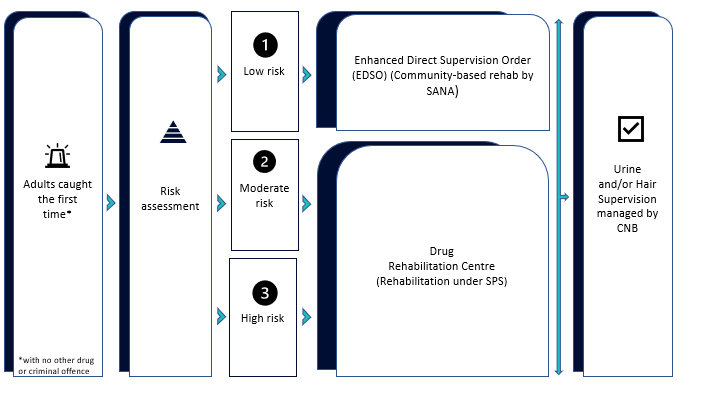
Diagram 1: Rehabilitation and supervision for adults caught for the first time, purely for drug consumption offences
Drug abusers who reoffend will be sent to the DRC.
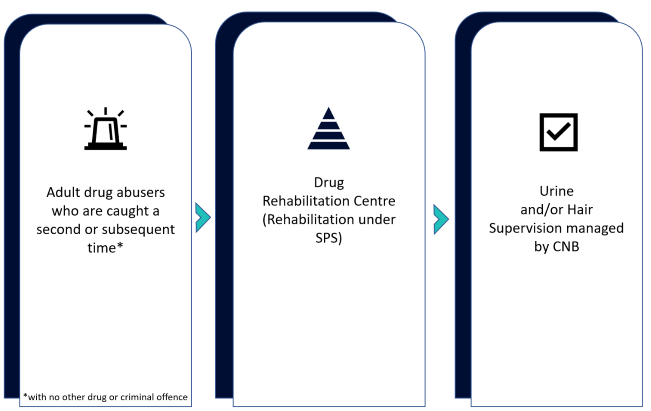
Diagram 2: Rehabilitation and supervision for adults caught multiple times for drug consumption offences
Enhanced Direct Supervision Order (EDSO) for first-time, low-risk adult abusers
Drug abusers who are caught for the first time and are assessed to have low risk of reoffending may be served with an Enhanced Direct Supervision Order (EDSO). The EDSO was introduced in 2019 as part of Misuse of Drugs Act amendments, to help and strengthen the reintegration of abusers into society.
Supervisees under the EDSO do not go to the DRC. They will be assigned a community case manager by the Singapore Anti-Narcotics Association (SANA) to support them and their family in their rehabilitation. They are allowed to stay at their place of residence during the period of supervision but will be required to attend compulsory counselling sessions and undergo urine tests. The counselling sessions involve psychology-based methods such as goal-setting and family engagement. Supervisees are assessed regularly during their rehabilitation journey and the interventions are adjusted accordingly based on their progress.
Drug Rehabilitation Centre for repeat and or higher-risk abusers
Drug abusers with moderate or higher risk of relapse, or who are repeat abusers, will undergo rehabilitation at the DRC. The DRC separates abusers by risk of reoffending and treatment and rehabilitation would be for 12 months or more.
To help abusers to rehabilitate and reintegrate into society, abusers who successfully complete their DRC regime will not have a criminal record. This applies only if they are not under investigation for any other drug or criminal offence for which they may be charged in court. In such an instance, the abuser may also be charged in court for drug consumption and if found guilty, will have a criminal record.
In 2019, in order to help pure drug abusers to reintegrate back into society, the DRC regime was enhanced and extended to repeat pure drug abusers who were third-timers and above. The DRC regime consists of two main phases: in-care, and Community-Based Programmes (CBPs), both of which are overseen by the Singapore Prison Service (SPS).
During the in-care phase in the DRC, they receive intensive rehabilitation carried out by SPS where the type of programme, intensity and duration of rehabilitation varies according to individuals’ rehabilitation needs. This includes psychological-based intervention programmes that target drug use habits, family programmes that equip inmates with relationships skills, as well as vocational and employability skills training to support ex-abusers in their reintegration into society.
After the in-care phase, they will be emplaced on one of three CBPs subject to their progress and conduct during their rehabilitation programme. The three CBPs include halfway-house, day release or residential scheme. Learn more about these CBPs here: Community-Based Programmes. Once they are emplaced on such CBPs, they are known as supervisees. Any breach or misconduct during this period may result in their recall to the DRC.
Staying drug-free can be tough and supervision can help keep drug abusers from a relapse
All drug abusers caught after 1 August 2019 for drug consumption are issued Supervision Orders and placed on the Drug Supervision Scheme for five years. Under the Supervision Order, supervisees are required to report to CNB on a regular basis. This supervision period is crucial in helping supervisees kick the drug habit and develop a drug-free lifestyle.
Supervision 2.0
In May 2025, CNB rolled out Supervision 2.0, a transformation of the supervision regime to better meet the needs of ex-drug abusers in building a drug-free life. Key components of Supervision 2.0 include Community Supervision Sessions and Hair Analysis Testing replacing Urine Testing as the default testing regime for eligible supervisees.
Community Supervision Sessions
In 2019, amendments were passed to the Misuse of Drug Act which enhanced CNB’s enforcement powers as well as the rehabilitation and supervision regimes.
Community Supervision Sessions are regular one-on-one sessions between supervisees and an assigned CNB supervision officer. These sessions allow our officers to assess the supervisees’ well-being and better understand their residual needs.
CNB supervision officers are trained in Community Supervision Skills needed to effectively engage supervisees, as part of CNB’s stepped up community supervision efforts. The officers apply evidence-based approaches to help assess the needs and identify the interventions required by supervisees. For instance, if the supervisee requires assistance with housing or employment, our officer will refer their case to the appropriate agencies for support. Officers are also trained how to guide and engage their supervisees, preventing them from falling back into drug abuse.
Hair Analysis Testing
Supervisees also undergo regular mandatory drug tests that are important to deter drug relapse and allow for early intervention if they do relapse. Under Supervision 2.0, Hair Analysis Testing (HAT) is now the default detection method for eligible supervisees.
HAT is as reliable as urine testing for drug detection. The biggest difference is that hair testing can detect drug use over a longer period of time. This means that supervisees are not required to report to CNB as frequently, minimising disruption to their lives.
Learn more about Supervision 2.0 and catch how CNB supervision officer, Firdaus, supports supervisees in their re-integration journey here: CNB Behind The Scenes